
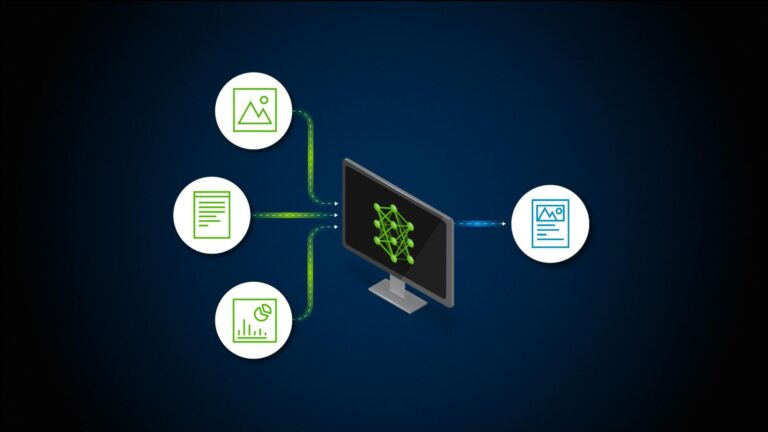
 A retrieval-augmented generation (RAG) application has exponentially higher utility if it can work with a wide variety of data types—tables, graphs, charts,…
A retrieval-augmented generation (RAG) application has exponentially higher utility if it can work with a wide variety of data types—tables, graphs, charts, and diagrams—and not just text. This requires a framework that can understand and generate responses by coherently interpreting textual, visual, and other forms of information. In this post, we discuss the challenges of tackling multiple…
 After exploring the fundamentals of diffusion model sampling, parameterization, and training as explained in Generative AI Research Spotlight: Demystifying…
 The union of ray tracing and AI is pushing graphics fidelity and performance to new heights. Helping you build optimized, bug-free applications in this era of…
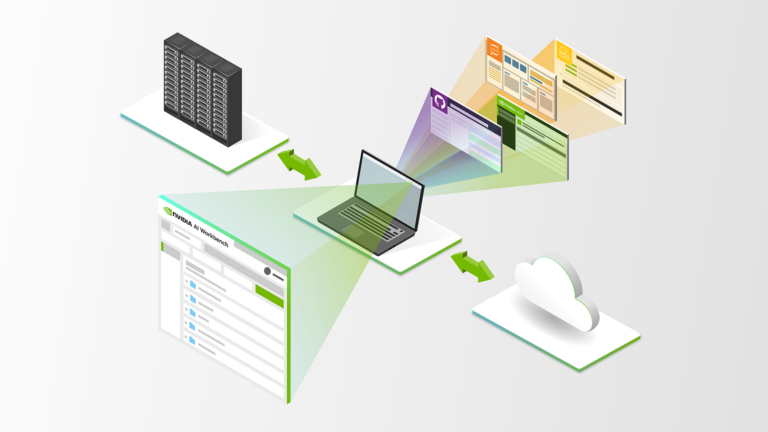 NVIDIA AI Workbench, a toolkit for AI and ML developers, is now generally available as a free download. It features automation that removes roadblocks for…
 Across the globe, enterprises are realizing the benefits of generative AI models. They are racing to adopt these models in various applications, such as…
 The rise in generative AI adoption has been remarkable. Catalyzed by the launch of OpenAI’s ChatGPT in 2022, the new technology amassed over 100M users within…
 Autonomous machine development is an iterative process of data generation and gathering, model training, and deployment characterized by complex multi-stage,…
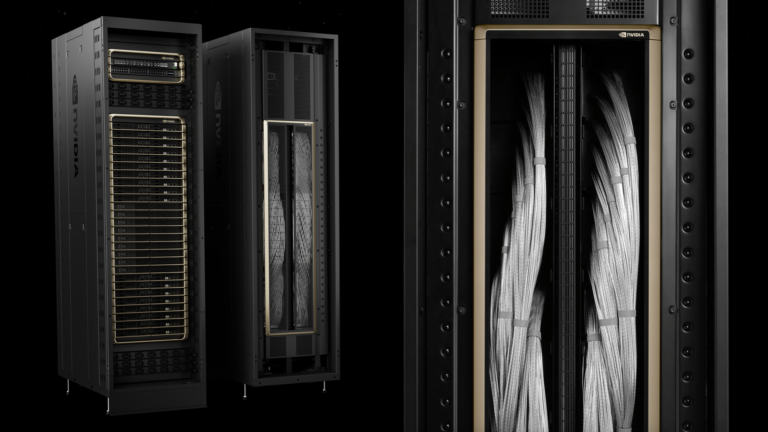 What is the interest in trillion-parameter models? We know many of the use cases today and interest is growing due to the promise of an increased capacity for:…