Categories
Misc

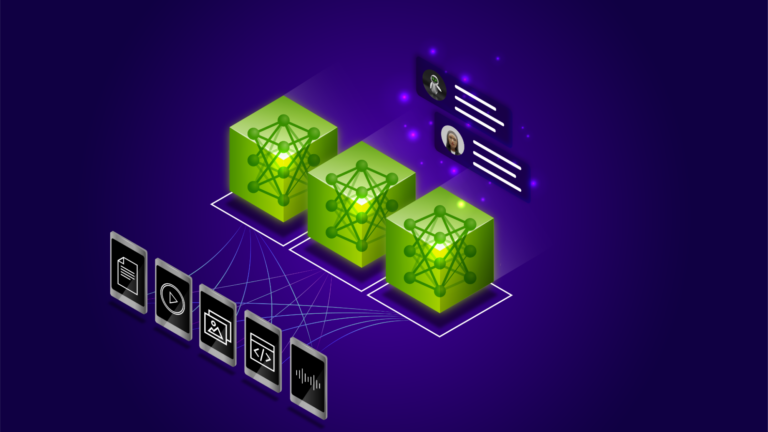
Scaling LLMs with NVIDIA Triton and NVIDIA TensorRT-LLM Using Kubernetes

Large language models (LLMs) have been widely used for chatbots, content generation, summarization, classification, translation, and more. State-of-the-art LLMs…

Large language models (LLMs) have been widely used for chatbots, content generation, summarization, classification, translation, and more. State-of-the-art LLMs and foundation models, such as Llama, Gemma, GPT, and Nemotron, have demonstrated human-like understanding and generative abilities. Thanks to these models, AI developers do not need to go through the expensive and time consuming training…
Source

Categories
Misc

Multi-Agent AI and GPU-Powered Innovation in Sound-to-Text Technology

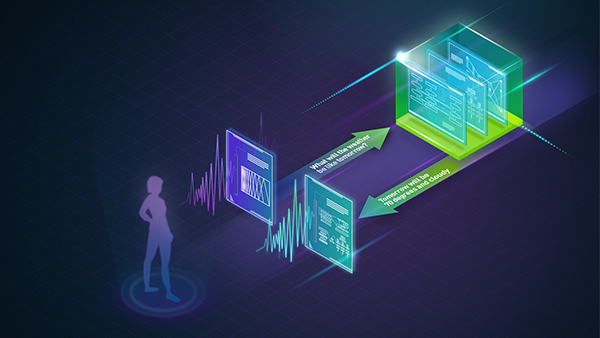
The Automated Audio Captioning task centers around generating natural language descriptions from audio inputs. Given the distinct modalities between the input…
The Automated Audio Captioning task centers around generating natural language descriptions from audio inputs. Given the distinct modalities between the input (audio) and the output (text), AAC systems typically rely on an audio encoder to extract relevant information from the sound, represented as feature vectors, which a decoder then uses to generate text descriptions.

Source

Categories
Misc

Releasing Outlines-core 0.1.0: structured generation in Rust and Python

Categories
Misc

🧨 Diffusers welcomes Stable Diffusion 3.5 Large

Categories
Misc

Transformers.js v3: WebGPU support, new models & tasks, and more…

Categories
Misc

What Is Agentic AI?

AI chatbots use generative AI to provide responses based on a single interaction. A person makes a query and the chatbot uses natural language processing to reply. The next frontier of artificial intelligence is agentic AI, which uses sophisticated reasoning and iterative planning to autonomously solve complex, multi-step problems. And it’s set to enhance productivity
Read Article

Categories
Misc

A Beginner’s Guide to Simulating and Testing Robots with ROS 2 and NVIDIA Isaac Sim

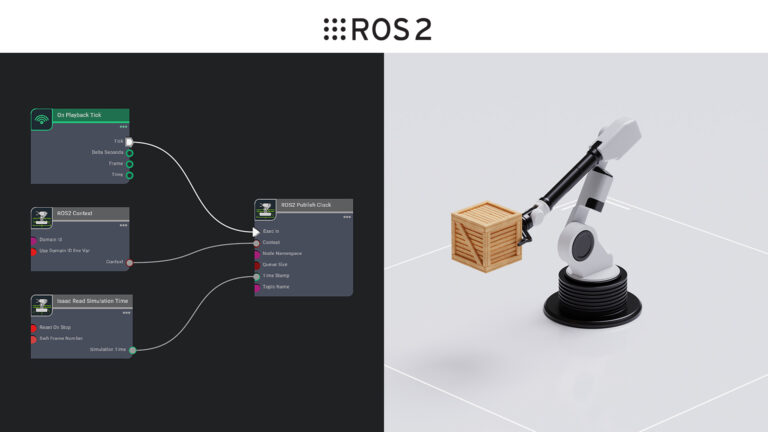
Physical AI-powered robots need to autonomously sense, plan, and perform complex tasks in the physical world. These include transporting and manipulating…
Physical AI-powered robots need to autonomously sense, plan, and perform complex tasks in the physical world. These include transporting and manipulating objects safely and efficiently in dynamic and unpredictable environments. Robot simulation enables developers to train, simulate, and validate these advanced systems through virtual robot learning and testing. It all happens in physics…

Source

Categories
Misc

How to Calibrate Sensors with MSA Calibration Anywhere for NVIDIA Isaac Perceptor

Multimodal sensor calibration is critical for achieving sensor fusion for robotics, autonomous vehicles, mapping, and other perception-driven applications….

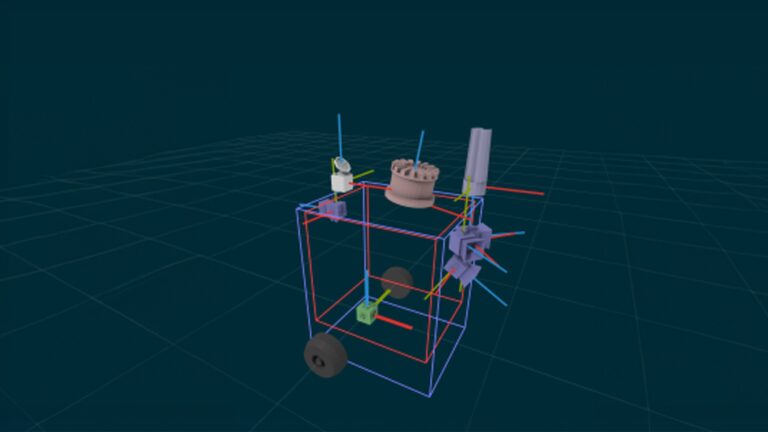
Multimodal sensor calibration is critical for achieving sensor fusion for robotics, autonomous vehicles, mapping, and other perception-driven applications. Traditional calibration methods, which rely on structured environments with checkerboards or targets, are complex, expensive, time-consuming, and don’t scale. An automatic sensor calibration solution that simplifies the calibration…

Source

Categories
Misc

NVIDIA Brings Generative AI Tools, Simulation and Perception Workflows to ROS Developer Ecosystem

At ROSCon in Odense, one of Denmark’s oldest cities and a hub of automation, NVIDIA and its robotics ecosystem partners announced generative AI tools ,simulation, and perception workflows for Robot Operating System (ROS) developers. Among the reveals were new generative AI nodes and workflows for ROS developers deploying to the NVIDIA Jetson platform for edge
Read Article

Categories
Misc

NVIDIA CEO Jensen Huang to Spotlight Innovation at India’s AI Summit

The NVIDIA AI Summit India, taking place October 23–25 at the Jio World Convention Centre in Mumbai, will bring together the brightest minds to explore how India is tackling the world’s grand challenges. A major highlight: a fireside chat with NVIDIA founder and CEO Jensen Huang on October 24. He’ll share his insights on AI’s
Read Article