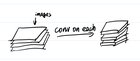
I am using a jupyter notebook to load data and train a CNN. I have about 80,000 images and each time I try to load the data, the VS code instance crashes. I was wondering if I could load the first 20,000 images (since I know that will work) and train the network, then delete those images and load the next 20,000 and start training again and so on until I use all my images. From my understanding, as long as I do not reset the kernel (of the notebook) I should be fine. Please help/give suggestions on how to avoid/fix this issue.
Archaeologist Daria Dabal is bringing the past to life, with an assist from NVIDIA technology. Dabal works on various archaeological sites in the U.K., conducting field and post-excavation work. Over the last five years, photogrammetry — the use of photographs to create fully textured 3D models — has become increasingly popular in archaeology. Dabal has Read article >
Your Amazon Prime delivery just got smarter. Autonomous trucking company Plus recently signed a deal with Amazon to provide at least 1,000 self-driving systems to retrofit on the e-commerce giant’s delivery fleet. These systems are powered by NVIDIA DRIVE Xavier for high-performance, energy-efficient and centralized AI compute. The agreement follows Plus’ announcement of going public Read article >
It’s a new month for GFN Thursday, which means a new month full of games on GeForce NOW. August brings a wealth of great new PC game launches to the cloud gaming service, including King’s Bounty II, Humankind and NARAKA: BLADEPOINT. In total, 13 titles are available to stream this week. They’re just a portion Read article >
I’m a novice on ML and mobile development topics, and I’d like to practice and make a basic app which could recognize a class of objects (animals, food, anything with freely available dataset) and returns information of said object.
I see dozens of articles and public repositories on implementing image recognition on mobile, mostly using Tensorflow, and I’ve found a lot of image datasets on Kaggle to train on.
Now I’m confused on how to actually start. I was thinking of using React Native since I’m a bit more experienced with Javascript and using npm packages, but a lot of articles say to just go native for better performance. I don’t know if what I’m doing would be considered “heavy” so I’m a bit confused here.
New research creates a deployable AI framework for detecting gravitational waves within massive amounts of data at several magnitudes faster than real time.
Scientists searching the universe for gravitational waves just got a boost thanks to a new study and AI.
The research, recently published in Nature Astronomy, creates a deployable AI framework for detecting gravitational waves within massive amounts of data—at several magnitudes faster than real time.
Created by a group of scientists from Argonne National Laboratory, the University of Chicago, the University of Illinois at Urbana-Champaign, NVIDIA, and IBM, the work highlights how AI and supercomputing can accelerate reproducible, data-driven discoveries.
“As a computer scientist, what’s exciting to me about this project is that it shows how, with the right tools, AI methods can be integrated naturally into the workflows of scientists. Allowing them to do their work faster and better. Augmenting, not replacing, human intelligence,” study senior author Ian Foster, director of Argonne’s Data Science and Learning division said in a press release.
In 2015, the advanced Laser Interferometer Gravitational-Wave Observatory (LIGO) first detected gravitational waves when two black holes, 1.3 billion light-years away, collided and merged.
These waves occur when massive objects quickly accelerate (such as a star exploding or massive objects colliding) creating a ripple through space time.
The notable discovery confirmed part of Einstein’s theory of relativity, hypothesizing that space and time are linked. It also marked the start of gravitational wave astronomy, which could result in a deeper understanding of the cosmos, including dark energy, gravity, and neutron stars.
It also holds potential for scientists to step back through time to the moments around the Big Bang.
Since 2015, many more gravitational wave sources have been detected from LIGO. As the observatory continues with sensor upgrades and refinements, the expanse of detectors within the universe will also grow, creating large amounts of data for processing. Quickly computing these data streams remains key to gravitational wave astronomy advancements and discoveries.
In 2018 Eliu Huerta, lead for Translational AI and Computational Ccience at Argonne, demonstrated the capability of machine learning to detect gravitational waves from multiple LIGO detector data streams.
In this study, the researchers further refined the model, which uses the cuDNN-accelerated deep learning framework distributed over 64 NVIDIA GPUs. They tested the model against LIGO data from 2017 and found it accurately identified four binary black hole mergers—without any misclassifications. It also processed a month’s worth of data in under 7 minutes.
“In this study, we’ve used the combined power of AI and supercomputing to help solve timely and relevant big-data experiments. We are now making AI studies fully reproducible, not merely ascertaining whether AI may provide a novel solution to grand challenges,” Huerta said.
The team’s models are open-source and readily available.
CFO Commentary to Be Provided in Writing Ahead of CallSANTA CLARA, Calif., Aug. 04, 2021 (GLOBE NEWSWIRE) — NVIDIA will host a conference call on Wednesday, August 18, at 2 p.m. PT (5 p.m. …


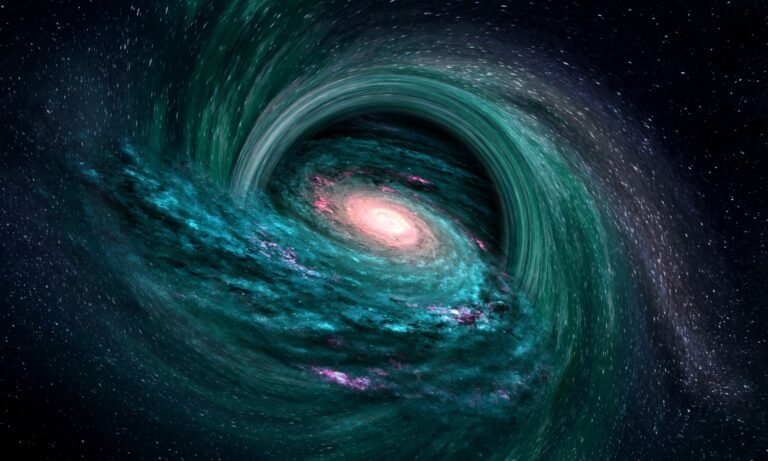 New research creates a deployable AI framework for detecting gravitational waves within massive amounts of data at several magnitudes faster than real time.