Categories
Misc

Looking for advice/resources

Greetings all,

I want to create a tool to detect rooftops in satellite images and create a mask of them to display over the image and/or generate a geoJSON of the mask to use in further processing. I actually want to go a step further an try and estimate the 3d geometry of the roof, but that could be outside the scope of this question.

Does something like this already exist open source that I haven’t found yet? Do I need to do something like Mask R-CNN? Also if anyone has suggestions on general resources in image processing or geospatial image processing I would be greatly appreciate it!

submitted by /u/ashmortar
[visit reddit] [comments]

Categories
Misc

NVIDIA Sets Conference Call for First-Quarter Financial Results

SANTA CLARA, Calif., May 05, 2021 — NVIDIA will host a conference call on Wednesday, May 26, at 2 p.m. PT (5 p.m. ET) to discuss its financial results for the first quarter of fiscal year 2022,…

Categories
Misc

New on NGC: New and Updated HPC Containers on the NGC Catalog

There are more than a hundred containers spanning HPC, deep learning and machine applications available in the NGC catalog, NVIDIA’s hub of GPU-optimized HPC and AI applications.

A container is a portable unit of software that combines the application and all its dependencies into a single package that is agnostic to the underlying host OS. In a high-performance computing (HPC) environment, containers remove the need for building complex environments or maintaining environment modules, making it easy for researchers and systems administrators to deploy their HPC applications. 

There are more than a hundred containers spanning HPC, deep learning and machine applications available in the NGC catalog, NVIDIA’s hub of GPU-optimized HPC and AI applications. The containers available in the catalog are tested for performance, reliability and scalability. They are also screened for Common Exposure and Vulnerabilities (CVEs) and malware to ensure that they are ready for deployment in a production environment. 

Below are some highlights of some of the new as well as updated containers that can run on both x86 and ARM platforms and fully support Singularity runtimes. 

New containers added to the catalog: 

  • TinkerHP is an MPI based, massively parallel package dedicated to long polarizable molecular dynamics simulations and to polarizable QM/MM.
  • TorchANI is a PyTorch-Based Deep Learning Implementation of the ANI Neural Network Potentials.
  • LBPM or Lattice Boltzmann Porous Media is a software package for simulating flow through porous media. 
  • NGC Pre-Flight Check light-weight tool verifies that the container runtime is set up correctly for GPUs and InfiniBand.

You can also find updated versions of the some of the key HPC applications: 

Get started today by pulling the container for your HPC needs from the list shown or visiting the NGC catalog

Categories
Misc

Putting the AI in Retail: Walmart’s Grant Gelvin on Prediction Analytics at Supercenter Scale

With only one U.S. state without a Walmart supercenter — and over 4,600 stores across the country — the retail giant’s prediction analytics work with data on an enormous scale. Grant Gelven, a machine learning engineer at Walmart Global Tech, joined NVIDIA AI Podcast host Noah Kravitz for the latest episode of the AI Podcast. Read article >

The post Putting the AI in Retail: Walmart’s Grant Gelvin on Prediction Analytics at Supercenter Scale appeared first on The Official NVIDIA Blog.

Categories
Misc

BMW Brings Together Art, Artificial Intelligence for Virtual Installation Using NVIDIA StyleGAN

BMW today unveiled a virtual art installation that projects AI-generated artwork onto a virtual rendition of the automaker’s 8 Series Gran Coupe.  Dubbed “The Ultimate AI Masterpiece,” the installation harnessed NVIDIA StyleGAN — a generative model for high-resolution images — to create original artwork projection-mapped onto the virtual vehicle. The project debuts in conjunction with … Continued

BMW today unveiled a virtual art installation that projects AI-generated artwork onto a virtual rendition of the automaker’s 8 Series Gran Coupe. 

Dubbed “The Ultimate AI Masterpiece,” the installation harnessed NVIDIA StyleGAN — a generative model for high-resolution images — to create original artwork projection-mapped onto the virtual vehicle. The project debuts in conjunction with the contemporary art festival Frieze New York, and marks the 50th year of cultural engagement by the BMW Group.

“For 50 years, BMW has supported arts and culture through numerous initiatives as a way to engage and interact with consumers around the world in an authentic way,” said Uwe Dreher, vice president of marketing, BMW of North America. “As we continue these efforts into 2021, and look for new and creative ways to engage audiences, we shift to a virtual setting where we are combining centuries-old art and the latest AI technology to create something completely new and exciting.”

Collaborators Gary Yeh, founder of the art media company ArtDrunk, and Nathan Shipley, director of creative technology at Goodby, Silverstein & Partners, trained NVIDIA StyleGAN on 50,000 images of art across nine centuries as well as 50 contemporary works from artists BMW has worked with in past years. The trained model merges the learnings from classical art along with styles from the contemporary artists. 

“AI is an emerging medium of creative expression. It’s a fascinating space where art meets algorithm,” said Shipley. “Combining the historical works with the curated modern works and projecting the evolving images onto the 8 Series Gran Coupe serves a direct nod to BMW’s history of uniting automobiles, art, and technology.” 

The project uses the BMW car as a canvas to showcase each creator’s style — like that of South Korean charcoal artist Lee Bae. 

“In this case the AI learned from Lee Bae’s work. In a way, it sees those textures,” Shipley said. “And then on its own the AI generates this evolving stream of new textures. They’re informed by his work, but they’re also unique.”

Developed by NVIDIA Research, StyleGAN has been adopted for digital storytelling, art exhibits, manga illustrations and reimagined historical portraits.

For more AI-inspired artwork, visit the AI Art Gallery featured at the recent NVIDIA GPU Technology Conference.

Categories
Misc

Streaming Everything with NVIDIA Rivermax

NVIDIA Rivermax 1.5, the newest release of the IP-based video and data streaming library, includes key features and capabilities enabling performance boosts and quicker integrations.

In 2020, many of us adopted a work-from-home routine, and this new norm has been stressing IT networks. It shouldn’t be a surprise that the sudden boost in remote working drives the need for a more dynamic IT environment, one that can pull in resources on demand.

Over the past few years, we’ve focused on the Media & Entertainment (M&E) market, supporting the global industry as it evolves from proprietary SDI to cost-effective Ethernet/IP infrastructure solutions. NVIDIA technologies are enabling M&E to take the next transformational step toward cloud computing, while meeting compliance with the most stringent SMPTE ST-2110-21 specification requirements.

On the journey to modernize M&E network interconnect, we introduced NVIDIA Rivermax, an optimized, standard-compliant software library API for streaming data. Rivermax software runs on NVIDIA ConnectX-5 or later network adapters, enabling the use of common off-the-shelf (COTS) servers for streaming SD, HD, and up to Ultra-HD video flows. The Rivermax-ConnectX-5 adapter card combination also enables compliance with M&E specifications, such as the SMPTE 2110-21; reduces CPU utilization for video data streaming; and removes bottlenecks for the highest throughput. It can reach 82 Gbps of streamed video with a single CPU core.

As our partners have rolled out new Rivermax-based, full-IP solutions rigorously tested in their labs, we’re excited to share the fruits of these collaborative investments in Rivermax 1.5, the latest release of the streaming library. Rivermax 1.5 includes key features and capabilities enabling performance boosts and quicker integrations. One of these new features allows Rivermax-accelerated applications to stream not only video, audio, and ancillary data but other data stream formats as well, enabling Rivermax accelerations and CPU savings in many new markets and applications:

  • Compressed video
  • Healthcare imaging (DICOM-RTV)
  • Cloud gaming
  • Autonomous car sensor streaming (video/LiDAR/RADAR)
  • And more

Another good piece of news is that Rivermax 1.5 recently passed the JT-NM Tested program (March 16 – 20, 2020), allowing for integration and interoperability with multiple other market vendors.

Rivermax 1.5 release contents

The Rivermax 1.5 release contains the following updates and features:

  • Virtualized Rivermax over vmware ESXi and Linux OpenStack (currently in beta-level support)
  • Rivermax API updates:
    • Replaced TX pause API with a flag to commit API
    • Changed structure of in-buffer attributes
    • Changed function signature of in-query buffer API
  • New 802.1Q VLAN tagging support
  • New SDK code examples:
    • Media sender:
      • Real video content, interlace, 59.94, 29.97
    • Media receiver:
      • GPU-CUDA support for color space conversion (from YCBCR to RGB): Display or playback a video stream on screen or through X11 SSH
      • Interlace video formats
      • 2022-7 Rx SW sample code to get you started quickly on software implementation of 2022-7, which will be offloaded to ConnectX-6 Dx hardware with future releases
  • Generic API (beta version): For streaming any type of data. Get all the goodies of Rivermax, like traffic shaping (accurate packet pacing), high bandwidth for any type of UDP-based data stream with low CPU utilization and supporting both Linux and Windows.
  • Introduce Rivermax for Mellanox ConnectX-6 Dx in beta-level support over Linux OS (with feature parity to ConnectX-5)
  • NVIDIA-Jetson platform software image (as presented at IBC2019)
    • Based on Rivermax 1.5 release
    • Demos running Rivermax on NVIDIA-Jetson platform
    • Includes sender and receiver examples
    • GPU is integrated with the Media_receiver for both CSC and on-screen rendering
    • AnalyzeX (SMPTE ST2110-20 verification software) while running video viewers

Want to discuss Rivermax? Comment below or reach out to your local account/support team.

Here’s to seeing you at the next M&E show!

Categories
Misc

Handy data augmentation toolkit for image classification put in a single efficient TensorFlow op

Handy data augmentation toolkit for image classification put in a single efficient TensorFlow op submitted by /u/lnstadrum
[visit reddit] [comments]
Categories
Misc

Easiest way to get/set flattened array of trainable weights (and biases)

For example i want to be able to do something like this…

weights = model.get_trainable_weights() weights *= 2 model.set_trainable_weights(weights) 

I’ve googled it and seems like getting trainable weights might be pretty straightforward, but i’m not finding anything on being able to supply a flat array of weights for the model to set.

Right now I’m manually tracking the shapes, calculating which part of the flat array is for this tensor then taking that subset and reshaping it. It’s seems more difficult than it needs to be plus its also pretty expensive computationally taking as long as a tenth of a second just to set weights.

submitted by /u/Yogi_DMT
[visit reddit] [comments]

Categories
Misc

AI Gone Global: Why 20,000+ Developers from Emerging Markets Signed Up for GTC

Major tech conferences are typically hosted in highly industrialized countries. But the appetite for AI and data science resources spans the globe — with an estimated 3 million developers in emerging markets. Our recent GPU Technology Conference — virtual, free to register, and featuring 24/7 content — for the first time featured a dedicated track on Read article >

The post AI Gone Global: Why 20,000+ Developers from Emerging Markets Signed Up for GTC appeared first on The Official NVIDIA Blog.

Categories
Misc

NVIDIA Merlin Latest Enhancements Streamlines Recommender Workflows with .5 Release

The latest Merlin .5 update includes a data generator for training, multi-GPU dataloader, and initial support for session-based recommenders.

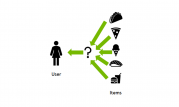
Billions of people in the world are online. Many discrete moments online are spent browsing, shopping, streaming entertainment, or engaging with social media. Each discrete moment, or session, online is an opportunity for recommenders to make informed decisions a bit easier, faster, and more personalized for an individual person.Yet, when considering scale, this translates into recommenders potentially supporting billions of people interacting with trillions of things online.

At GTC Spring 2021, NVIDIA shared how retail, entertainment, on-demand, and social companies are building and utilizing recommenders at scale including early adopters of NVIDIA Merlin. Merlin open source components include NVTabular for ETL, HugeCTR for training, and Triton for inference. The NVIDIA Merlin team continues to ingest feedback from early adopters to streamline recommender workflows for machine learning engineers. The latest Merlin .5 update includes a data generator for training, multi-GPU dataloader, and initial support for session-based recommenders. Also, the update continuously reaffirms NVIDIA’s commitment to democratizing and streamlining recommender workflows. 

Supporting Experimentation and Streamlining Recommender Workflows 

Ongoing experimentation is vital for fine tuning recommender models performance before models are deployed to production. A configurable data generator, using synthetic data, helps machine learning engineers calculate the probability distribution to be uniform or power-law for categorical features, without modifying the configuration file. Merlin HugeCTR’s new data generator considers categorical data and is particularly helpful for benchmarking and research purposes. 

Merlin .5’s inclusion of a multi-GPU dataloader was based on feedback from Merlin early adopters and also helps streamline workflows. Machine learning engineers are able to use the Merlin NVTabular TensorFlow (TF) dataloader for multi-GPU training on a  single node using TF Distributed. Merlin NVTabular utilizes Dask and Dask-cuDF to scale easily to multi-GPU and multi-node as well as provide a high-performance recommender specific ETL pipeline.

Merlin Session-Based Recommenders Support: Just A Beginning 

Data scientists and machine learning engineers at the forefront of e-commerce, news, and social media recommender work have added, or are considering to add, session-based recommenders. While collaborative filtering and content-based filtering are established recommender methods, session-based recommenders are gaining attention due to the potential increased accuracy of predictions when users interests are dynamic and specific to a shorter time frame (i.e., within a session). With Merlin .5, NVTabular provides new preprocessing functionality needed to transform and group data for session based-recommenders.

 Download and Try Merlin’s Latest Update

The latest preprocessing and training enhancements to NVIDIA Merlin reaffirms NVIDIA’s commitment to democratizing and accelerating recommender workflows. As machine learning engineers and data scientists use a hybrid of libraries, packages, tools, and techniques to create effective and impactful recommenders, Merlin components are designed to be easy-to-use and interoperable with existing recommender workflows. 

To discover hands-on how Merlin components streamline recommender workflows, download and try Merlin NVTabular for ETL, HugeCTR for training, and Triton for inference.