
|
submitted by /u/karball [visit reddit] [comments] |

 DataBloom
|
|
submitted by /u/karball [visit reddit] [comments] |
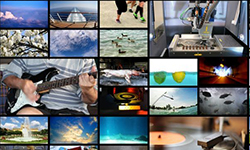 Facebook AI researchers this week announced SEER, a self-supervised model that surpasses the best self-supervised systems.
Facebook AI researchers this week announced SEER, a self-supervised model that surpasses the best self-supervised systems, and also outperforms supervised models on tasks including image classification, object detection, and segmentation.
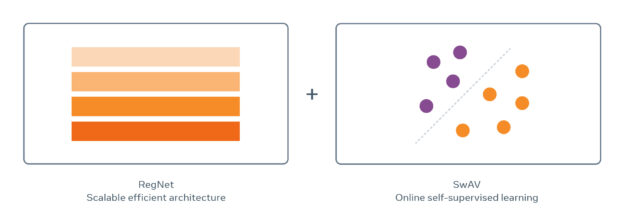
Combining RegNet architectures with the SwAV online clustering approach, SEER is a billion-parameter model pretrained on a billion random images.
Instead of relying on labeled datasets, self-supervised learning models for computer vision generate data labels by finding relationships between images with no annotations or metadata. Such models are considered key to developing AI with “common sense,” says Yann LeCun, Facebook AI’s chief scientist.
After using a billion public Instagram images for pretraining, SEER achieved 84.2 percent accuracy on the popular ImageNet dataset, beating state-of-the-art self-supervised systems. The researchers also trained SEER using just 10 percent of images in the popular ImageNet dataset, still achieving nearly 78 percent accuracy. Even when trained with just 1 percent of ImageNet, the model was over 60 percent accurate.
SEER was trained on 512 NVIDIA V100 Tensor Core GPUs with 32GB of RAM for 30 days, said Facebook software engineer Priya Goyal. The researchers used mixed precision from the NVIDIA Apex library and gradient checkpointing tools from PyTorch to reduce memory usage and increase training speed of the model.
The researchers chose RegNet architecture for its ability to scale to billions or trillions of parameters while accommodating runtime and memory constraints. The SwAV algorithm helped achieve record performance with 6x less training time.
“Eliminating the need for human annotations and metadata enables the computer vision community to work with larger and more diverse data sets, learn from random public images, and potentially mitigate some of the biases that come into play with data curation,” wrote Facebook AI in a blog post. “Self-supervised learning can also help specialize models in domains where we have limited images or metadata, like medical imaging.”
Facebook also open-sourced VISSL, the PyTorch-based general-purpose library for self-supervised learning that was used to develop SEER.
Read more from Facebook AI.
The full paper is available on ArXiv.
Florida orange juice is getting a taste of AI. With the Sunshine State’s $9 billion annual citrus crops plagued by a fruit-souring disease, researchers and businesses are tapping AI to help rescue the nation’s largest producer of orange juice. University of Florida researchers are developing AI applications for agriculture. And the technology — computer vision Read article >
The post Juicing AI: University of Florida Taps Computer Vision to Combat Citrus Disease appeared first on The Official NVIDIA Blog.
Everything we do on the internet — which is just about everything we do these days — depends on the work of clusters, which are also called pods. When we stream a hot new TV show, order a pair of jeans or Zoom with grandma, we use clusters. You’re reading this story thanks to pods. Read article >
The post What Is a Cluster? What Is a Pod? appeared first on The Official NVIDIA Blog.

Hello,
I am working on an image caption model but I faced a problem with saving the model as tflite or HDF5. I tried a lot of things but does not work.
My model is a subclass model and similar to this work :
https://tensorflow.google.cn/tutorials/text/image_captioning?hl=en
Can anyone help me?
submitted by /u/Rama_AI
[visit reddit] [comments]
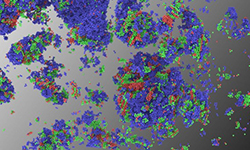 Simulations by Lawrence Livermore National Laboratory researchers have uncovered a new mechanism for freezing in metals, advancing scientists’ understanding of nucleation.
Simulations by Lawrence Livermore National Laboratory researchers have uncovered a new mechanism for freezing in metals, advancing scientists’ understanding of nucleation, the process of gases or liquids cooling into crystalline solids.
Run on 256 NVIDIA Tensor Core GPUs on the Lassen supercomputer, the simulations modeled how heated copper solidifies, providing atomic-scale insights into the Ostwald step rule — a nearly 150-year-old discovery that liquids first freeze into a metastable structure before stabilizing into a final solid stage.
In a research article published in the Proceedings of the National Academy of Sciences, researchers Babak Sadigh, Luis Zepeda-Ruiz, and Jon Belof share findings revealing that this metastable phase can be kinetically stabilized by temperature.
”Using modern simulation methods, we have tried to provide a framework for predicting how process conditions can be manipulated to design completely new materials using both a modern laser platform as well as classical heating in furnaces,” said Sadigh.
The powerful supercomputing resources allowed the scientists to for the first time simulate with dynamic experiments how nucleation occurs in liquids compressed to a high density, such as in Earth’s metal core, which has a liquid outer layer around a solid center. The findings were surprising, revealing that nucleation first occurs through a body-centered cubic phase that is unstable.
“Under these extreme conditions, such as in the center of Earth, the thermodynamic phase diagram sort of goes out the window in terms of predictive capability and one needs to turn to kinetic phase maps,” said Belof, the project principal investigator for phase transition kinetics and program leader for the Equation of State program at LLNL.
In the visualization below, the team simulated 0.5 nanoseconds of the solidification of copper at a very high pressure, showing fluctuations as the molecules nucleate:
The findings led to a modification of classical nucleation theory, with a new nucleation model now incorporated into the SAMSA hydrodynamics code for modeling the transition between phases of matter.
Read more from Lawrence Livermore National Laboratory.
The full article is available from PNAS: “Metastable-solid phase diagrams derived from polymorphic solidification kinetics.”
 The Kubernetes-based, containerized application, is now available on the NVIDIA NGC Catalog – a GPU-optimized hub for AI and HPC containers.
Training AI models is an extremely time-consuming process. Without proper insight into a feasible alternative to time-consuming development and migration of model training to exploit the power of large, distributed clusters, training projects remain considerably long lasting. To address these issues, Samsung SDS developed the Brightics AI Accelerator. The Kubernetes-based, containerized application, is now available on the NVIDIA NGC catalog – a GPU-optimized hub for AI and HPC containers, pre-trained models, industry SDKs, and Helm charts that helps simplify and accelerate AI development and deployment processes.
The Samsung SDS Brightics AI Accelerator application automates machine learning, speeds up model training and improves model accuracy with key features such as automated feature engineering, model selection, and hyper-parameter tuning without requiring infrastructure development and deployment expertise. Brightics AI Accelerator can be used in many industries such as healthcare, manufacturing, retail, automotive and across different use cases spanning computer vision, natural language processing and more.
Key Features and Benefits:

Get started by pulling Samsung’s Brightics AI Accelerator container from the NGC catalog.
Guess what’s back? Back again? GFN Thursday. Tell a friend. Check out this month’s list of all the exciting new titles and classic games coming to GeForce NOW in March. First, let’s get into what’s coming today. Don’t Hesitate It wouldn’t be GFN Thursday if members didn’t have new games to play. Here’s what’s new Read article >
The post GFN Thursday — 21 Games Coming to GeForce NOW in March appeared first on The Official NVIDIA Blog.

|
submitted by /u/analyticsindiam [visit reddit] [comments] |
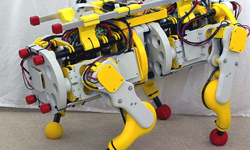 The project uses the NVIDIA Jetson Nano Developer Kit to recognize hand gestures and control a robot dog without a controller.
James Bruton of XRobots was awarded the ‘Jetson Project of the Month’ for OpenDog V2. This project uses the NVIDIA Jetson Nano Developer Kit to recognize hand gestures and control a robot dog without a controller.
James, a robot inventor, thought it’d be nice if his OpenDog robot responded to hand gestures. To make this happen, he used transfer learning to retrain an existing SSD-Mobilenet object detection model using PyTorch. During the training process, he identified five hand gestures for the robot to move forward, backward, left, right and to jump. Using the camera capture tool, he captured these gestures and assigned them to the appropriate class.

He ensured that these images were captured at a specific distance from the camera to make sure the OpenDog doesn’t get distracted by hand gestures or similar patterns in the background.

James notes that the project can be improved by adding more training data which includes gestures in different indoor and outdoor backgrounds and from different users. Furthermore, he plans to convert OpenDog to a ROS robot similar to his Really Useful AI Robot. He created a series of videos to show his journey of building this project and the code is available on GitHub.