Hi Guys,
Is there a way to store a tensor in multiple GPUs? I have a tensor that is so large that requires >16Gb of GPU RAM to store. I was wonder how that can be achieved. Thanks!
submitted by /u/dr_meme_69
[visit reddit] [comments]
 DataBloom
Hi Guys,
Is there a way to store a tensor in multiple GPUs? I have a tensor that is so large that requires >16Gb of GPU RAM to store. I was wonder how that can be achieved. Thanks!
submitted by /u/dr_meme_69
[visit reddit] [comments]
Hello,
I am working on a project to replace layers by new layers to see if the changes affected positively or negatively. I want to then get the output feature map and input feature map after replacement. The issue I am having is that after a couple of changes, I get that I have multiple connections and a new column called ‘connnected to’ appears. Here are the summaries and the code I am using for replacing layers. I sometimes get this warning after replacing a convolutional layer with the code provided.
pastebin to warning and model summary
I have tried to create an Input layer and then use the same functional approach. My first layer being the input layer and the second the conv2d_0 layer. However, I get ValueError Disconnected from Graph for the input layer after two layer changes.
Code:
inputs = self.model.layers[0].input x = self.model.layers[0](inputs) for layer in self.model.layers[1:]: if layer.name == layer_name: new_layer = #creation of custom layer that generates output of same shape as replaced layer. x = new_layer(x) else: layer.trainable = False x = layer(x) self.model = tf.keras.Model(inputs, x)
submitted by /u/ElvishChampion
[visit reddit] [comments]
Four words: smart, sustainable, Super Bowl. Polestar’s commercial during the big game made it clear no-compromise electric vehicles are now mainstream. Polestar Chief Operating Officer Dennis Nobelius sees driving enjoyment and autonomous-driving capabilities complementing one another in sustainable vehicles that keep driving — and the driver — front and center. NVIDIA’s Katie Washabaugh spoke with Read article >
The post Polestar’s Dennis Nobelius on the Sustainable Performance Brand’s Plans appeared first on NVIDIA Blog.
I’m trying to implement fastspeech_quat.tflite into a flutter app. I’m using tflite_flutter package. I’ve loaded up the model like this Interpreter _interpreter = await Interpreter.fromAsset(‘fastspeech_quant.tflite’);
Next I wanted to run an inference on some text so I would use _interpreter.runForMultipleInputs(input, output)
I just don’t understand how to format the input and output for the model. So I ran _interpreter.getInputTensors() and I get
[ Tensor{_tensor: Pointer<TfLiteTensor>: address=0x6f6b16ef80, name: input_ids, type: TfLiteType.int32, shape: [1, 1], data: 4, Tensor{_tensor: Pointer<TfLiteTensor>: address=0x6f6b16eff0, name: speaker_ids, type: TfLiteType.int32, shape: [1], data: 4, Tensor{_tensor: Pointer<TfLiteTensor>: address=0x6f6b16f060, name: speed_ratios, type: TfLiteType.float32, shape: [1], data: 4, Tensor{_tensor: Pointer<TfLiteTensor>: address=0x6f6b16f0d0, name: f0_ratios, type: TfLiteType.float32, shape: [1], data: 4, Tensor{_tensor: Pointer<TfLiteTensor>: address=0x6f6b16f140, name: energy_ratios, type: TfLiteType.float32, shape: [1], data: 4 ]
_interpreter.getOutputTensors() give me
[Tensor{_tensor: Pointer<TfLiteTensor>: address=0x6f6ae108e0, name: Identity, type: TfLiteType.float32, shape: [1, 1, 80], data: 320, Tensor{_tensor: Pointer<TfLiteTensor>: address=0x6f6ae118a0, name: Identity_1, type: TfLiteType.float32, shape: [1, 1, 80], data: 320, Tensor{_tensor: Pointer<TfLiteTensor>: address=0x6f6ae05820, name: Identity_2, type: TfLiteType.int32, shape: [1, 1], data: 4, Tensor{_tensor: Pointer<TfLiteTensor>: address=0x6f6ae04e10, name: Identity_3, type: TfLiteType.float32, shape: [1, 1], data: 4, Tensor{_tensor: Pointer<TfLiteTensor>: address=0x6f6ae03750, name: Identity_4, type: TfLiteType.float32, shape: [1, 1], data: 4]
I need an example of how I would go about it. I’ve combed through examples but it’s just not clicking for me.
submitted by /u/kai_zen_kid
[visit reddit] [comments]
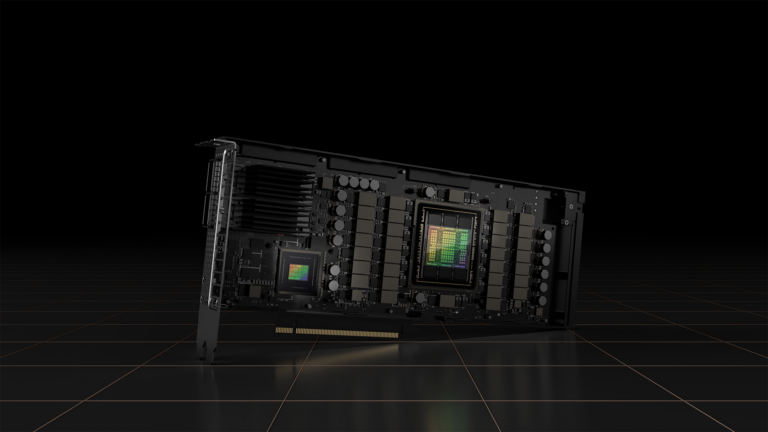 Learn about the H100 CNX, an innovative new hardware accelerator for GPU-accelerated I/O intensive workloads.
There is an ongoing demand for servers with the ability to transfer data from the network to a GPU at ever faster speeds. As AI models keep getting bigger, the sheer volume of data needed for training requires techniques such as multinode training to achieve results in a reasonable timeframe. Signal processing for 5G is more sophisticated than previous generations, and GPUs can help increase the speed at which this happens. Devices such as robots or sensors, are also starting to use 5G to communicate with edge servers for AI-based decisions and actions.
Purpose-built AI systems, such as the recently announced NVIDIA DGX H100, are specifically designed from the ground up to support these requirements for data center use cases. Now, another new product can help enterprises also looking to gain faster data transfer and increased edge device performance, but without the need for high-end or custom-built systems.
Announced by NVIDIA CEO Jensen Huang at NVIDIA GTC last week the NVIDIA H100 CNX is a high-performance package for enterprises. It combines the power of the NVIDIA H100 with the advanced networking capabilities of the NVIDIA ConnectX-7 SmartNIC. Available in a PCIe board, this advanced architecture delivers unprecedented performance for GPU-powered and I/O intensive workloads for mainstream data center and edge systems.
In standard PCIe devices, the control plane and data plane share the same physical connection. However, in the H100 CNX, the GPU and the network adapter connect through a direct PCIe Gen5 channel. This provides a dedicated high-speed path for data transfer between the GPU and the network using GPUDirect RDMA and eliminates bottlenecks of data going through the host.
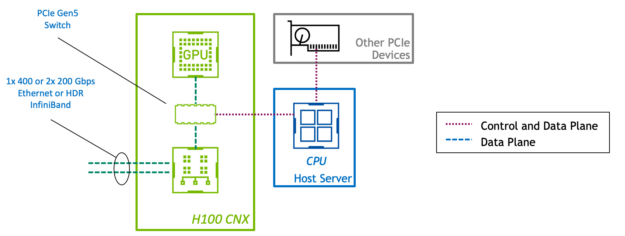
With the GPU and SmartNIC combined on a single board, customers can leverage servers at PCIe Gen4 or even Gen3. Achieving a level of performance once only possible with high-end or purpose-built systems saves on hardware costs. Having these components on one physical board also improves space and energy efficiency.
Integrating a GPU and a SmartNIC into a single device creates a balanced architecture by design. In systems with multiple GPUs and NICs, a converged accelerator card enforces a 1:1 ratio of GPU to NIC. This avoids contention on the server’s PCIe bus, so the performance scales linearly with additional devices.
Core acceleration software libraries from NVIDIA such as NCCL and UCX automatically make use of the best-performing path for data transfer to GPUs. Existing accelerated multinode applications can take advantage of the H100 CNX without any modification, so customers immediately can benefit from the high performance and scalability.
The H100 CNX delivers GPU acceleration along with low-latency and high-speed networking. This is done at lower power, with a smaller footprint and higher performance than two discrete cards. Many use cases can benefit from this combination, but the following are particularly notable.
5G signal processing with GPUs requires data to move from the network to the GPU as quickly as possible, and having predictable latency is critical too. NVIDIA converged accelerators combined with the NVIDIA Aerial SDK provide the highest-performing platform for running 5G applications. Because data doesn’t go through the host PCIe system, processing latency is greatly reduced. This increased performance is even seen when using commodity servers with slower PCIe systems.
NVIDIA AI-on-5G is made up of the NVIDIA EGX enterprise platform, the NVIDIA Aerial SDK for software-defined 5G virtual radio area networks, and enterprise AI frameworks. This includes SDKs, such as NVIDIA Isaac and NVIDIA Metropolis. Edge devices such as video cameras, industrial sensors, and robots can use AI and communicate with the server over 5G.
The H100 CNX makes it possible to provide this functionality in a single enterprise server, without deploying costly purpose-built systems. The same accelerator applied to 5G signal processing can be used for edge AI with the NVIDIA Multi-Instance GPU technology. This makes it possible to share a GPU for several different purposes.
Multinode training involves data transfer between GPUs on different hosts. In a typical data center network, servers often run into various limits around performance, scale, and density. Most enterprise servers don’t include a PCIe switch, so the CPU becomes a bottleneck for this traffic. Data transfer is bound by the speed of the host PCIe backplane. Although a 1:1 ratio of GPU:NIC is ideal, the number of PCIe lanes and slots in the server can limit the total number of devices.
The design of H100 CNX alleviates these problems. There is a dedicated path from the network to the GPU for GPUDirect RDMA to operate at near line speeds. The data transfer also occurs at PCIe Gen5 speeds regardless of host PCIe backplane. Scaling up of GPU power within a host can be done in a balanced manner, since the 1:1 ratio of GPU:NIC is inherently achieved. A server can also be equipped with more acceleration power, since fewer PCIe lanes and device slots are required for converged accelerators than discrete cards.
The NVIDIA H100 CNX is expected to be available for purchase in the second half of this year. If you have a use case that could benefit from this unique and innovative product, contact your favorite system vendor and ask when they plan to offer it with their servers.
Learn more about the NVIDIA H100 CNX.
I basically have a simple CNN that outputs a single integer value at the end. This number is corresponding to a certain angle, so i know that the bounds have to be between 0 and 359. My intuition tells me that if i were to somehow limit the final value to this range instead of being unbounded like in most activation functions, i would reach any form of convergence sooner.
To try this, I changed the last layer and applied the sigmoid activation function, then added an additional lambda layer where i just multiplied the value by 359. However, this model still has a very high loss (using MSE, at times it’s actually greater than 3592 which is leading me to believe i’m not actually bounding the output between 0 and 359).
Is it a good idea to bound my output like this, and what would be the best way to implement it?
submitted by /u/NSCShadow
[visit reddit] [comments]

|
I have 15 classes, each one has around 90 training images and 7 validation images. Am I doing something wrong or are my images just really bad? It’s supposed to identify between 15 different fish species, and some of them do look pretty similar. Any help is appreciated submitted by /u/IraqiGawad |
Code:
current = model(np.append(np.ndarray.flatten(old_field),next_number).reshape(1,-1))
next = target(np.append(np.ndarray.flatten(game.field),action).reshape(1,-1))
nextState = game.field
target_q_values = (next * 0.9) + reward # bu yong max? shi lilunshangdeb bushi quzuida
# loss = tf.convert_to_tensor((target_q_values – current)**2)
loss = mse(target_q_values, current)
train_step(loss)
Train_step:
@tf.function
def train_step(loss):
with tf.GradientTape(persistent=True) as tape:
gradient = tape.gradient(loss, model.trainable_variables)
optimizer.apply_gradients(zip(gradient,model.trainable_variables))
submitted by /u/Striking-Warning9533
[visit reddit] [comments]
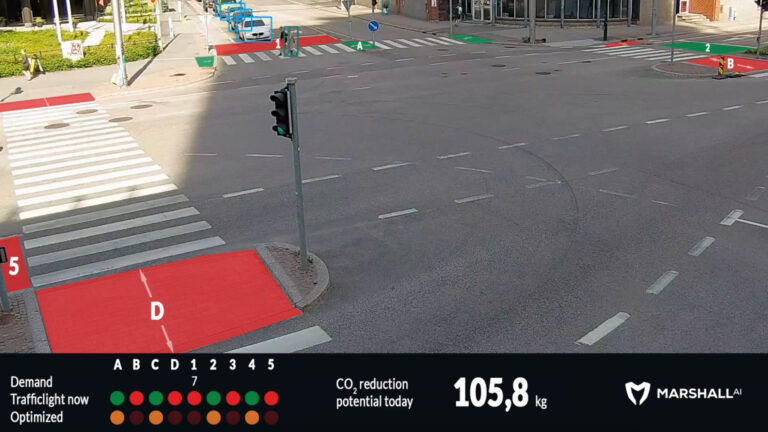 MarshallAI is using NVIDIA GPU accelerated technologies to help cities improve their traffic management, reduce carbon emissions, and save drivers time.
A major contributor to CO2 emissions in cities is traffic. City planners are always looking to reduce their carbon footprint and design efficient and sustainable infrastructure. NVIDIA Metropolis partner, MarshallAI, is helping cities improve their traffic management and reduce CO2 emissions with vision AI applications.
MarshallAI’s computer vision and AI solution helps cities get closer to carbon neutrality by making traffic management more efficient. They apply deep-learning-based artificial intelligence to video sensors to understand roadway usage, and inform and optimize traffic planning. When a city’s traffic light management system is able to adjust to real-time situations and optimize traffic flow, its increased efficiency can reduce emission-causing activities, such as frequent idling of vehicles.
As one of Finland’s fastest growing metropolitan areas, the City of Vantaa faces the challenge of quickly and safely transporting people on aging and constrained infrastructure. The city is deploying MarshallAI’s vision AI applications to optimize traffic management of intersections in real time.
The vision AI solution analyzes traffic camera streams and uses the information to adjust traffic lights according to the situation dynamically. These inputs are much richer than those from traditional sensors, capturing metrics on the amount and type of traffic users and the direction they’re driving.
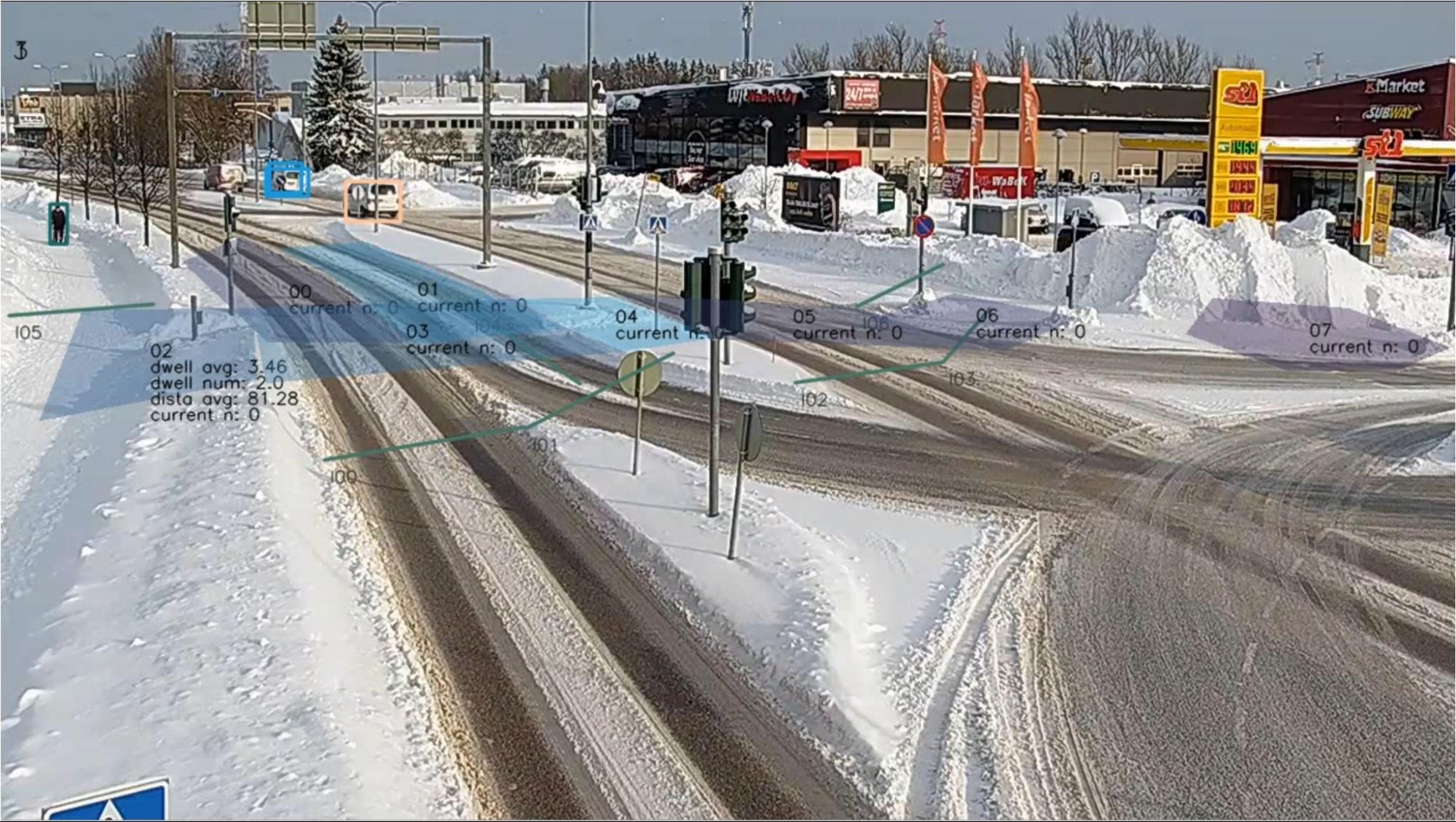
MarshallAI leverages the powerful capabilities of NVIDIA Metropolis and NVIDIA GPUs. This includes the embedded NVIDIA Jetson edge AI platform—which provides GPU-accelerated computing in a compact and energy-efficient module to fuel their solution. The MarshallAI platform runs on NVIDIA EGX hardware, which brings compute to the edge by processing data from numerous cameras and providing real-time, actionable insights. MarshallAI’s traffic safety solution for the City of Vantaa automatically detects, counts, and measures the speed of vehicles, bicycles, and passerby.
“NVIDIA has made it possible for us to offer edge to cloud solutions depending on the client’s need; ranging from small, portable edge computing units to large-scale server setups. No matter the hardware constraints, the NVIDIA ecosystem enables us to run the same software stack with very little configuration changes providing optimal performance,” says Tomi Niittumäki, CTO of MarshallAI.
MarshallAI’s solution uses GPU-accelerated vision AI to process video data captured by camera sensors at traffic intersections. The system provides real-time and high-accuracy vehicle, pedestrian, and bicycle classifications, and speeds. It also tracks vehicle occupancy, paths, flows, and turning movements. These insights allow cities to react quickly to real-time situations and manage traffic effectively even during the most congested scenarios.
Understands traffic flow: Identifies and quantifies pedestrians, vehicles, and bicycles and detects the routes of all traffic users.
Data collection: Determines how much time traffic users spend waiting at red lights and taking unnecessary stops.
Optimizing traffic: Dynamically detects and responds to real-time traffic scenarios, eliminating unnecessary stops and idling caused by traditional time-based traffic light cycles.
Prioritizing traffic: Understands the quantity, wait time and directional velocity of vehicles on the road and can prioritize certain traffic users such as emergency vehicles.
MarshallAI’s machine vision and object detection solutions are extremely reliable. During their collaboration with the city of Vantaa, their average object detection rate was over 98% in all object classes. Different vehicle classes (car, van, bus, truck, articulated truck, and motorcycle) were treated distinctly and calculated separately.
By applying automatic traffic optimization solutions to an intersection, cities can save drivers up to every sixth traffic light stop and over a month’s worth of cumulative waiting time annually. This saves time and also reduces emissions.
MarshallAI solutions are working towards deploying across several cities such as Paris, Amsterdam, Helsinki and Tallinn, which are prioritizing the reduction of CO2 emissions and traffic congestion. The proof-of-concept installations in the Paris region and Helsinki have shown an emission reduction potential between 3% and 8% depending on the intersection, based only on optimization without any negative impact for traffic users.
“I am a visionary,” says an AI, kicking off the latest installment of NVIDIA’s I AM AI video series. Launched in 2017, I AM AI has become the iconic opening for GTC keynote addresses by NVIDIA founder and CEO Jensen Huang. Each video, with its AI-created narration and soundtrack, documents the newest advances in artificial Read article >
The post Latest ‘I AM AI’ Video Features Four-Legged Robots, Smart Cell Analysis, Tumor-Tracking Tech and More appeared first on NVIDIA Blog.