
Hi,
The title says the question. Here is the code which works in a colab. How can I convert it to make it work in the local env?:
import numpy as np
from google.colab import files
from keras.preprocessing import image
uploaded = files.upload()
for fn in uploaded.keys():
# predicting images
path = ‘/content/’ + fn
img = image.load_img(path, target_size=(300, 300))
x = image.img_to_array(img)
x = x / 255
x = np.expand_dims(x, axis=0)
images = np.vstack([x])
classes = model.predict(images, batch_size=10)
print(classes[0])
if classes[0]>0.5:
print(fn + ” is a human”)
else:
print(fn + ” is a horse”)
submitted by /u/StarLan7
[visit reddit] [comments]
I have been using tensor flow for a while now but I just recently ran into a problem with one of my programs. While trying to create a convolutional network I got the error
Epoch 1/4 Process finished with exit code -1073740791 (0xC0000409)
where I have never had this error before. I have all of the updated CUDA’s and CUDD’s and have them in the right folder so I don’t know what the problem is. Anything helps thanks.
#from keras.datasets import imdb from keras.preprocessing import sequence import tensorflow as tf VOCAB_SIZE = 88584 MAXLEN = 250 BATCH_SIZE = 64 (train_data, train_labels), (test_data, test_labels) = imdb.load_data(num_words=VOCAB_SIZE) train_data = sequence.pad_sequences(train_data, MAXLEN) test_data = sequence.pad_sequences(test_data, MAXLEN) model = tf.keras.Sequential([ tf.keras.layers.Embedding(VOCAB_SIZE, 32), # Graph vector form, 32 dimensions tf.keras.layers.LSTM(32), # Long-Short term memory tf.keras.layers.Dense(1, activation="sigmoid") # Between 0-1 ]) model.compile(optimizer=tf.keras.optimizers.RMSprop(), loss="mean_squared_error", metrics=[tf.keras.metrics.RootMeanSquaredError()]) history = model.fit(x=train_data, y=train_labels, batch_size=128, epochs=10)
submitted by /u/Cheif_Cheese
[visit reddit] [comments]



|
submitted by /u/spmallick [visit reddit] [comments] |
Hello everyone.
Is there a way to bypass this without having to only use my CPU?
Thanks
submitted by /u/dalpendre
[visit reddit] [comments]
In recent years, machine learning (ML) competitions in health have attracted ML scientists to work together to solve challenging clinical problems. These competitions provide access to relevant data and well-defined problems where experienced data scientists come to compete for solutions and learn new methods. However, a fundamental difficulty in organizing such challenges is obtaining and curating high quality datasets for model development and independent datasets for model evaluation. Importantly, to reduce the risk of bias and to ensure broad applicability of the algorithm, evaluation of the generalisability of resulting algorithms should ideally be performed on multiple independent evaluation datasets by an independent group of scientists.
One clinical problem that has attracted substantial ML research is prostate cancer, a condition that 1 in 9 men develop in their lifetime. A prostate cancer diagnosis requires pathologists to examine biological tissue samples under a microscope to identify cancer and grade the cancer for signs of aggressive growth patterns in the cells. However, this cancer grading task (called Gleason grading) is difficult and subjective due to the need for visual assessment of cell differentiation and Gleason pattern predominance. Building a large dataset of samples with expert annotations can help with the development of ML systems to aid in prostate cancer grading.
To help accelerate and enable more research in this area, Google Health, Radboud University Medical Center and Karolinska Institutet joined forces to organize a global competition, the Prostate cANcer graDe Assessment (PANDA) Challenge, on the open Kaggle platform. In “Artificial Intelligence for Diagnosis and Gleason Grading of Prostate Cancer: the PANDA challenge”, published in Nature Medicine, we present the results of the challenge. The study design of the PANDA challenge provided the largest public whole-slide image dataset available and was open to participants from April 21st until July 23rd, 2020. The development datasets remain available for further research. In this effort, we compiled and publicly released a European cohort of prostate cancer cases for algorithm development and pioneered a standardized evaluation setup for digital pathology that enabled independent, blinded external validation of the algorithms on data from both the United States and EU.
 |
| The global competition attracted participants from 65 countries (the size of the circle for each country illustrates the number of participants). |
Design of the Panda Challenge
The challenge had two phases: a development phase (i.e., the Kaggle competition) and a validation phase. During the competition, 1,290 developers from 65 countries competed in building the best performing Gleason grading algorithm, having full access to a development set for algorithm training. Throughout the competition teams submitted algorithms that were evaluated on a hidden tuning set.
In the validation phase, a selection of top performing algorithms were independently evaluated on internal and external validation datasets with high quality reference grades from panels of expert prostate pathologists. In addition, a group of general pathologists graded a subset of the same cases to put the difficulty of the task and dataset in context. The algorithms submitted by the teams were then compared to grades done by groups of international and US general pathologists on these subsets.
 |
| Overview of the PANDA challenge’s phases for development and validation. |
Research Velocity During the Challenge
We found that a group of Gleason grading ML algorithms developed during a global competition could achieve pathologist-level performance and generalize well to intercontinental and multinational cohorts. On all external validation sets, these algorithms achieved high agreement with urologic pathologists (prostate specialists) and high sensitivity for detecting tumor in biopsies. The Kaggle platform enabled the tracking of teams’ performance throughout the competition. Impressively, the first team achieving high agreement with the prostate pathologists at above 0.90 (quadratically weighted Cohen’s kappa) on the internal validation set occurred within the first 10 days of the competition. By the 33rd day, the median performance of all teams exceeded a score of 0.85.
 |
| Progression of algorithms’ performances throughout the competition, as shown by the highest score on the tuning and internal validation sets among all participating teams. During the competition teams could submit their algorithm for evaluation on the tuning set, after which they received their score. At the same time, algorithms were evaluated on the internal validation set, without disclosing these results to the participating teams. The development of the top score obtained by any team shows the rapid improvement of the algorithms. |
Learning from the Challenge
By moderating the discussion forum on the Kaggle platform, we learned that the teams’ openness in sharing code via colab notebooks led to rapid improvement across the board, a promising sign for future public challenges, and a clear indication of the power of sharing knowledge on a common platform.
Organizing a public challenge that evaluates algorithm generalization across independent cohorts using high quality reference standard panels presents substantial logistical difficulties. Assembling this size of a dataset across countries and organizations was a massive undertaking. This work benefited from an amazing collaboration between the three organizing institutions which have all contributed respective publications in this space, two in Lancet Oncology and one in JAMA Oncology. Combining these efforts provided a high quality foundation on which this competition could be based. With the publication, Radboud and Karolinska research groups are also open sourcing the PANDA challenge development datasets to facilitate the further improvement of prostate Gleason grading algorithms. We look forward to seeing many more advancements in this field, and more challenges that can catalyze extensive international knowledge sharing and collaborative research.
Acknowledgements
Key contributors to this project at Google include Po-Hsuan Cameron Chen, Kunal Nagpal, Yuannan Cai, David F. Steiner, Maggie Demkin, Sohier Dane, Fraser Tan, Greg S. Corrado, Lily Peng, Craig H. Mermel. Collaborators on this project include Wouter Bulten, Kimmo Kartasalo, Peter Ström, Hans Pinckaers, Hester van Boven, Robert Vink, Christina Hulsbergen-van de Kaa, Jeroen van der Laak, Mahul B. Amin, Andrew J. Evans, Theodorus van der Kwast, Robert Allan, Peter A. Humphrey, Henrik Grönberg, Hemamali Samaratunga, Brett Delahunt, Toyonori Tsuzuki, Tomi Häkkinen, Lars Egevad, Masi Valkonen, Pekka Ruusuvuori, Geert Litjens, Martin Eklund and the PANDA Challenge consortium. We thank Ellery Wulczyn, Annisah Um’rani, Yun Liu, and Dale Webster for their feedback on the manuscript and guidance on the project. We thank our collaborators at NMCSD, particularly Niels Olson, for internal re-use of de-identified data which contributed to the US external validation set. Sincere appreciation also goes to Sami Lachgar, Ashley Zlatinov, and Lauren Winer for their feedback on the blogpost.

I’m experiencing very slow loading times (5 minutes) with an EfficientNet architecture I converted from PyTorch (PT -> ONNX_TF -> TF).
The problem is only present when I load the model with the `v1.compat` mode or with the C API, which is my final goal. However, it loads fast in the standard TF v2 mode In Python (< 1s). After loading the models, the inference seems equally fast and correct in all the cases. I’m using `v1.compat` only for debugging, as it seems to behave similar to the C API.
I’ve noticed that the issue disappears when I export the model from PyTorch with a fixed batch size of 1, however I would prefer to have dynamic batch size.
I created a topic in the TensorFlow forum with access to the models, and details to reproduce.
I’m looking for ideas on what could be the issue, and if the resulting SavedModels could be modified in a way the loading is as fast in the C API as in TF v2.
submitted by /u/pablo_alonso
[visit reddit] [comments]
submitted by /u/Ninja181
[visit reddit] [comments]
Large pre-trained language models, which are continuing to grow in size, achieve state-of-art results on many natural language processing (NLP) benchmarks. Since the development of GPT and BERT, standard practice has been to fine-tune models on downstream tasks, which involves adjusting every weight in the network (i.e., model tuning). However, as models become larger, storing and serving a tuned copy of the model for each downstream task becomes impractical.
An appealing alternative is to share across all downstream tasks a single frozen pre-trained language model, in which all weights are fixed. In an exciting development, GPT-3 showed convincingly that a frozen model can be conditioned to perform different tasks through “in-context” learning. With this approach, a user primes the model for a given task through prompt design, i.e., hand-crafting a text prompt with a description or examples of the task at hand. For instance, to condition a model for sentiment analysis, one could attach the prompt, “Is the following movie review positive or negative?” before the input sequence, “This movie was amazing!”
Sharing the same frozen model across tasks greatly simplifies serving and allows for efficient mixed-task inference, but unfortunately, this is at the expense of task performance. Text prompts require manual effort to design, and even well-designed prompts still far underperform compared to model tuning. For instance, the performance of a frozen GPT-3 175B parameter model on the SuperGLUE benchmark is 5 points below a fine-tuned T5 model that uses 800 times fewer parameters.
In “The Power of Scale for Parameter-Efficient Prompt Tuning”, presented at EMNLP 2021, we explore prompt tuning, a more efficient and effective method for conditioning frozen models using tunable soft prompts. Just like engineered text prompts, soft prompts are concatenated to the input text. But rather than selecting from existing vocabulary items, the “tokens” of the soft prompt are learnable vectors. This means a soft prompt can be optimized end-to-end over a training dataset. In addition to removing the need for manual design, this allows the prompt to condense information from datasets containing thousands or millions of examples. By comparison, discrete text prompts are typically limited to under 50 examples due to constraints on model input length. We are also excited to release the code and checkpoints to fully reproduce our experiments.
 |
| Prompt tuning retains the strong task performance of model tuning, while keeping the pre-trained model frozen, enabling efficient multitask serving. |
Prompt Tuning
To create a soft prompt for a given task, we first initialize the prompt as a fixed-length sequence of vectors (e.g., 20 tokens long). We attach these vectors to the beginning of each embedded input and feed the combined sequence into the model. The model’s prediction is compared to the target to calculate a loss, and the error is back-propagated to calculate gradients, however we only apply these gradient updates to our new learnable vectors — keeping the core model frozen. While soft prompts learned in this way are not immediately interpretable, at an intuitive level, the soft prompt is extracting evidence about how to perform a task from the labeled dataset, performing the same role as a manually written text prompt, but without the need to be constrained to discrete language.
Our codebase, implemented in the new JAX-based T5X framework, makes it easy for anyone to replicate this procedure, and provides practical hyperparameter settings, including a large learning rate (0.3), which we found was important for achieving good results.
Since soft prompts have a small parameter footprint (we train prompts with as few as 512 parameters), one can easily pass the model a different prompt along with each input example. This enables mixed-task inference batches, which can streamline serving by sharing one core model across many tasks.
 |
| Left: With model tuning, incoming data are routed to task-specific models. Right: With prompt tuning, examples and prompts from different tasks can flow through a single frozen model in large batches, better utilizing serving resources. |
Improvement with Scale
When evaluated on SuperGLUE and using a frozen T5 model, prompt tuning significantly outperforms prompt design using either GPT-3 or T5. Furthermore, as model size increases, prompt tuning catches up to the performance level of model tuning. Intuitively, the larger the pre-trained model, the less of a “push” it needs to perform a specific task, and the more capable it is of being adapted in a parameter-efficient way.
 |
| As scale increases, prompt tuning matches model tuning, despite tuning 25,000 times fewer parameters. |
The effectiveness of prompt tuning at large model scales is especially important, since serving separate copies of a large model can incur significant computational overhead. In our paper, we demonstrate that larger models can be conditioned successfully even with soft prompts as short as 5 tokens. For T5 XXL, this means tuning just 20 thousand parameters to guide the behavior of an 11 billion parameter model.
Resilience to Domain Shift
Another advantage of prompt tuning is its resilience to domain shift. Since model tuning touches every weight in the network, it has the capacity to easily overfit on the provided fine-tuning data and may not generalize well to variations in the task at inference time. By comparison, our learned soft prompts have a small number of parameters, so the solutions they represent may be more generalizable.
To test generalizability, we train prompt tuning and model tuning solutions on one task, and evaluate zero-shot on a closely related task. For example, when we train on the Quora Question Pairs task (i.e., detecting if two questions are duplicates) and evaluate on MRPC (i.e., detecting if two sentences from news articles are paraphrases), prompt tuning achieves +3.2 points higher accuracy than model tuning.
| Train | Eval | Tuning | Accuracy | F1 | |||||
| QQP | MRPC | Model | 73.1 ±0.9 | 81.2 ±2.1 | |||||
| Prompt | 76.3 ±0.1 | 84.3 ±0.3 | |||||||
| MRPC | QQP | Model | 74.9 ±1.3 | 70.9 ±1.2 | |||||
| Prompt | 75.4 ±0.8 | 69.7 ±0.3 |
| On zero-shot domain transfer between two paraphrase detection tasks, prompt tuning matches or outperforms model tuning, depending on the direction of transfer. |
Looking Forward
Prompt-based learning is an exciting new area that is quickly evolving. While several similar methods have been proposed — such as Prefix Tuning, WARP, and P-Tuning — we discuss their pros and cons and demonstrate that prompt tuning is the simplest and the most parameter efficient method.
In addition to the Prompt Tuning codebase, we’ve also released our LM-adapted T5 checkpoints, which we found to be better-suited for prompt tuning compared to the original T5. This codebase was used for the prompt tuning experiments in FLAN, and the checkpoints were used as a starting point for training the BigScience T0 model. We hope that the research community continues to leverage and extend prompt tuning in future research.
Acknowledgements
This project was a collaboration between Brian Lester, Rami Al-Rfou and Noah Constant. We are grateful to the following people for feedback, discussion and assistance: Waleed Ammar, Lucas Dixon, Slav Petrov, Colin Raffel, Adam Roberts, Sebastian Ruder, Noam Shazeer, Tu Vu and Linting Xue.
Categories
Latest Releases and Resources: Feb. 3-10
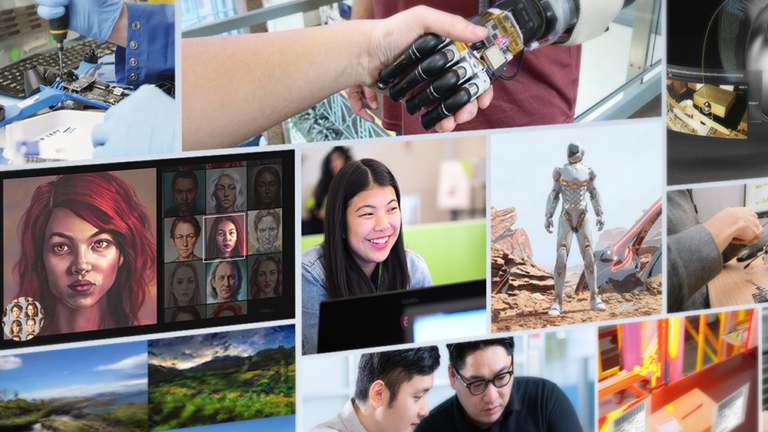 Sharpen your conversational AI, vehicle routing, or CUDA Python skills; learn how Metropolis boosts go-to-market efforts; find solutions for AI inference deployment.
Our weekly roundup covers the most recent software updates, learning resources, events, and notable news.
Courses
Learn to Deploy a Text Classification Model Using Riva (DLI)
This free, 30 minute, online course is self paced and includes a sample notebook from the NGC TAO Toolkit—Conversational AI collection, complete with a live GPU environment.
Learn more: Deploy a Text Classification Model Using Riva
Optimized Vehicle Routing (DLI)
In this free one-hour course, participants will work through a demonstration of a common vehicle routing optimization problem at their own pace. Upon completion, participants will be able to preprocess input data for use by NVIDIA ReOpt routing solver, and compose variants of the problem that reflect real-world business constraints.
Register online: Optimized Vehicle Routing
Fundamentals of Accelerated Computing with CUDA Python (DLI)
This Deep Learning Institute workshop teaches you the fundamental tools and techniques for running GPU-accelerated Python applications using CUDA GPUs and the Numba compiler. This workshop is being offered Feb, 23 from 9 am to 5 pm PT.
At the conclusion of the workshop, you’ll have an understanding of the fundamental tools and techniques for GPU-accelerated Python applications with CUDA and Numba, including:
- GPU-accelerate NumPy ufuncs with a few lines of code.
- Configure code parallelization using the CUDA thread hierarchy.
- Write custom CUDA device kernels for maximum performance and flexibility.
- Use memory coalescing and on-device shared memory to increase CUDA kernel bandwidth.
Register online: Fundamentals of Accelerated Computing with CUDA Python
Webinars
Learn How Metropolis Boosts Go-to-Market Efforts at a Developer Meetup
Join NVIDIA experts at developer meetups Feb. 16 and 17, and find out how the Metropolis program can grow your vision AI business and enhance go-to-market efforts.
Learn how:
- Metropolis Validation Labs optimize your applications and accelerate deployments.
- NVIDIA Fleet Command simplifies provisioning and management of edge deployments accelerating the time to scale from POC to production.
- NVIDIA Launchpad provides easy access to GPU instances for faster POCs and customer trial
Register online: How the NVIDIA Metropolis Program will Supercharge Your Business
A Flexible Solution for Every AI Inference Deployment
Dive into NVIDIA inference solutions, including open-source NVIDIA Triton Inference Server and NVIDIA TensorRT, with a webinar and live Q&A, Feb. 23 at 10 a.m. PT.
Learn how:
- To optimize, deploy, and scale AI models in production using Triton Inference Server and TensorRT.
- Triton streamlines inference serving across multiple frameworks, across different query types (real-time, batch, streaming), on CPUs and GPUs, and with a model analyzer for efficient deployment.
- To standardize workflows to optimize models using TensorRT and framework Integrations with PyTorch and TensorFlow.
- Real-world customers are benefitting from Triton and TensorRT.
Register online: A Flexible Solution for Every AI Inference Deployment