Hi all, I’m trying to use TF-Slim (yes it has to be tf-slim) and I’m having some trouble figuring out how to break my data up into batches. I want to avoid loading my dataset into RAM (although I could), but the documentation doesn’t specify how to handle batches. If anyone that has used tf-slim before could shed some light, it would be much appreciated.
The NVIDIA Deep Learning Institute (DLI) is offering instructor-led, hands-on training on how to implement multiple AI-based approaches to solve a specific use case of identifying network intrusions for telecommunications.
Whether you need to monitor cybersecurity threats, fraudulent financial transactions, product defects, or equipment health, artificial intelligence can help you catch data abnormalities before they impact your business. AI models can be trained and deployed to automatically analyze datasets, define “normal behavior,” and identify breaches in patterns quickly and effectively. These models can then be used to predict future anomalies. With massive amounts of data available across industries and subtle distinctions between normal and abnormal patterns, it’s critical that organizations use AI to quickly detect anomalies that pose a threat.
The NVIDIA Deep Learning Institute (DLI) is offering instructor-led, hands-on training on how to implement multiple AI-based approaches to solve a specific use case of identifying network intrusions for telecommunications. You’ll learn three different anomaly detection techniques using GPU-accelerated XGBoost, deep learning-based autoencoders, and generative adversarial networks (GANs) and then implement and compare supervised and unsupervised learning techniques. At the end of the workshop, you’ll be able to use AI to detect anomalies in your work across telecommunications, cybersecurity, finance, manufacturing, and other key industries.
By participating in this workshop, you’ll:
Prepare data and build, train, and evaluate models using XGBoost, autoencoders, and GANs
Detect anomalies in datasets with both labeled and unlabeled data
Classify anomalies into multiple categories regardless of whether the original data was labeled
Join the NGC team for a webinar and live Q&A on Aug. 25, at 10 a.m. PT
The NGC team is hosting a webinar and live Q&A. Topics include how to use containers from the NGC catalog deployed from Google Cloud Marketplace to GKE, a managed Kubernetes service on Google Cloud, that easily builds, deploys, and runs AI solutions.
Organizations are using computer vision to improve the product experience, increase production, and drive operational efficiencies. But, building a solution requires large amounts of labeled data, the software and hardware infrastructure to train AI models, and the tools to run real-time inference that will scale with demand.
With one click, NGC containers for AI can be deployed from Google Cloud Marketplace to GKE. This managed Kubernetes service on Google Cloud, makes it easy for enterprises to build, deploy, and run their AI solutions.
By joining this webinar, you will learn:
How the NGC catalog can work with GCP Marketplace to accelerate your AI workflows.
About ways the Transfer Learning Toolkit can be used as a template and a custom training data set.
How to easily deploy an NVIDIA Triton inferencing container from the GCP Marketplace that will scale inference using GKE.
There are more AI startups in healthcare than any other single industry. The number of AI startups in media and entertainment is about the same as that in retail. More than one in 10 of all AI startups is based in California. How do we know this? NVIDIA Inception, our acceleration platform for AI startups, Read article >
NVIDIA today announced the North American availability of NVIDIA Base Command™ Platform, a hosted AI development hub that provides enterprises with instant access to powerful computing infrastructure wherever their data resides.
Hi! A newbie Here. I am working on a Gesture recognition project with mi band and I need to collect the sensor data from the band. Is there any way to get realtime data from the accelerometer of the band?
Notify App for Mi Band does track realtime data from the accelerometer but is there a way to get that realtime data on the pc for gesture recognition?
Any advice would on this would be really appreciated.
In this update, we look at the ways NVIDIA TensorRT and the Triton Inference Server can help your business deploy high-performance models with resilience at scale.
In Case You Missed It (ICYMI) is a series in which we spotlight essential talks, whitepapers, blogs, and success stories showcasing NVIDIA technologies accelerating real world solutions.
In this update, we look at the ways NVIDIA TensorRT and the Triton Inference Server can help your business deploy high-performance models with resilience at scale. We start with an in-depth, step-by-step introduction to TensorRT and Triton. Next, we dig into exactly how Triton and Clara Deploy complement each other in your healthcare use cases. Finally, to round things out our whitepaper covers exactly what you’ll need to know when migrating your applications to Triton.
TensorRT and Triton in Practice
On-Demand:Inception Café – Accelerating Deep Learning Inference with NVIDIA TensorRT and Triton A step-by-step walkthrough applying NVIDIA TensorRT and Triton in conjunction with NVIDIA Clara Deploy. Watch >
Whitepaper: Inception Café – Migrating Your Medical AI App to Triton This whitepaper explores the end-to-end process of migrating an existing medical AI application to Triton. Read >
On-Demand: Introduction to TensorRT and Triton A Walkthrough of Optimizing Your First Deep Learning Inference Model An overview of TensorRT optimization of a PyTorch model followed by deployment of the optimized model using Triton. By the end of this workshop, developers will see the substantial benefits of integrating TensorRT and get started on optimizing their own deep learning models. Watch >
Clara Imaging
On-Demand: Clara Train 4.0 – 101 Getting Started This session provides a walk through the Clara Train SDK features and capabilities with a set of Jupyter Notebooks covering a range of topics, including Medical Model Archives (MMARs), AI-assisted annotation, and AutoML. These features help data scientists quickly annotate, train, and optimize hyperparameters for their deep learning model. Watch >
On-Demand: Clara Train 4.0 – 201 Federated Learning This session delivers an overview of federated learning, a distributed AI model development technique that allows models to be created without transferring data outside of hospitals or imaging centers. The session will finish with a walkthrough of Clara Train federated learning capabilities by going through a set of Jupyter Notebooks. Watch >
On-Demand:Medical Imaging AI with MONAI Bootcamp MONAI is a freely available, community-supported, open-source PyTorch-based framework for deep learning in medical imaging. It provides domain-optimized foundational capabilities for developing medical imaging training workflows in a native PyTorch paradigm. This MONAI Bootcamp offers medical imaging researchers an architectural deep dive of MONAI and finishes with a walkthrough of MONAI’s capabilities through a set of four Jupyter Notebooks. Watch >
Clara Guardian
On-Demand: Clara Guardian 101: A Hello World Walkthrough on the Jetson Platform NVIDIA Clara Guardian provides healthcare-specific pretrained models and sample applications that can significantly reduce the time-to-solution for developers building smart-hospital applications. It targets three categories—public safety (thermal screening, mask detection, and social distancing monitoring), patient care (patient monitoring, fall detection, and patient engagement), and operational efficiency (operating room workflow automation, surgery analytics, and contactless control). In this session, attendees will get a walkthrough of how to use Clara Guardian on the Jetson NX platform, including how to use the pretrained models for tasks like automatic speech recognition and body pose estimation. Watch >
Clara Parabricks
On-Demand: GPU-Accelerated Genomics Using Clara Parabricks, Gary Burnett NVIDIA Clara Parabricks is a software suite for performing secondary analysis of next generation sequencing (NGS) DNA and RNA data. A major benefit of Parabricks is that it is designed to deliver results at blazing fast speeds and low cost. Parabricks can analyze whole human genomes in under 30 minutes, compared to about 30 hours for 30x WGS data. In this session, attendees will take a guided tour of the Parabricks suite featuring live examples and real world applications. Watch >
Clara AGX
On-Demand: Using Ethernet to Stream High-Throughput, Low-Latency Medical Sensor Data Medical sensors in various medical devices generate high-throughput data. System designers are challenged to move the sensor data to the GPU for processing. Over the last decade, Ethernet speeds have increased from 10G to 100G, enabling new ways to meet this challenge. We’ll explore three technologies from NVIDIA that make streaming high-throughput medical sensor data over Ethernet easy and efficient — NVIDIA Networking ConnectX NICs, Rivermax SDK with GPUDirect, and Clara AGX. Learn about the capabilities of each of these technologies and explore examples of how these technologies can be leveraged by several different types of medical devices. Finally, a step-by-step demo will walk attendees through installing the software, initializing a link, and testing for throughput and CPU overhead. Watch >
Recommended Hardware
NVIDIA Clara AGX Developer Kit Delivers real-time AI and imaging for medical devices. By combining low-powered, NVIDIA Jetson AGX Xavier and RTX GPU with the NVIDIA Clara AGX SDK and the NVIDIA EGX stack, it’s easy to securely provision and remotely manage fleets of distributed medical instruments. Learn more >
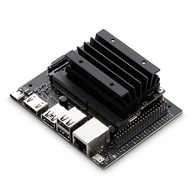
NVIDIA Jetson Discover the power of AI and robotics with the NVIDIA Jetson Nano 2GB Developer Kit. It’s small, powerful, and priced for everyone. Learning by doing is key for anyone new to AI and robotics, and this developer kit is ideal for hands-on projects. Learn more >
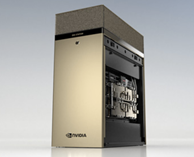
NVIDIA DGX Station A100 Data science teams need a dedicated AI resource that isn’t at the mercy of other areas within their organization: a purpose-built AI system without compromise that can handle all the jobs that busy data scientists can throw at it, an accelerated AI platform fully optimized across hardware and software for maximum performance. Learn more >
Inception Spotlight
NEW on NGC: Simplify and Unify Biomedical Analytics with Vyasa Learn how Vyasa Analytics leverages Clara Discovery, Triton Inference Server, RAPIDS, and DGX to develop solutions for pharmaceutical and biotechnology companies. Vyasa Analytics solutions are available from the NVIDIA NGC catalog for rapid evaluation and deployment. Read >
Do you have a startup? Join NVIDIA Inception’s global network of over 8,000 startups.
Using AI researchers have developed a new method for turning X-ray data into 3D visualizations, hundreds of times faster than traditional methods.
A team of scientists from Argonne National Laboratory developed a new method for turning X-ray data into visible, 3D images with the help of AI. The study, published in Applied Physics Reviews, develops a computational framework capable of taking data from the lab’s Advanced Photon Source (APS) and creating 3D visualizations hundreds of times faster than traditional methods.
“In order to make full use of what the upgraded APS will be capable of, we have to reinvent data analytics. Our current methods are not enough to keep up. Machine learning can make full use and go beyond what is currently possible,” Mathew Cherukara, a computational scientist at Argonne and study coauthor, said in a press release.
The advancement could have wide-ranging benefits to many areas of study relying on sizable amounts of 3D data, ranging from astronomy to nanoscale imaging.
Described as one of the most technologically complex machines in the world, the APS uses extremely bright X-ray beams to help researchers see the structure of materials at the molecular and atomic level. As these beams of light bounce off an object, detectors collect them in the form of data. With time and complex computations, this data is converted into images, revealing the object’s structure.
However, detectors are unable to capture all the beam data, leaving missing pieces of information. The researchers fill this gap by using neural networks that train computer models to identify objects and visualize an image, based on the raw data it is fed.
With 3D images this can be extremely timely due to the amount of information processed.
“We used computer simulations to create crystals of different shapes and sizes, and we converted them into images and diffraction patterns for the neural network to learn. The ease of quickly generating many realistic crystals for training is the benefit of simulations,” said Henry Chan, an Argonne postdoctoral researcher, and study coauthor.
The work for the new computational framework, known as 3D-CDI-NN, was developed using GPU resources at Argonne’s Joint Laboratory for System Evaluation, consisting of NVIDIA A100 and RTX 8000 GPUs.
“This paper… greatly facilitates the imaging process. We want to know what a material is, and how it changes over time, and this will help us make better pictures of it as we make measurements,” said Stephan Hruszkewycz, study coauthor and physicist with Argonne’s Materials Science Division.

 The NVIDIA Deep Learning Institute (DLI) is offering instructor-led, hands-on training on how to implement multiple AI-based approaches to solve a specific use case of identifying network intrusions for telecommunications.
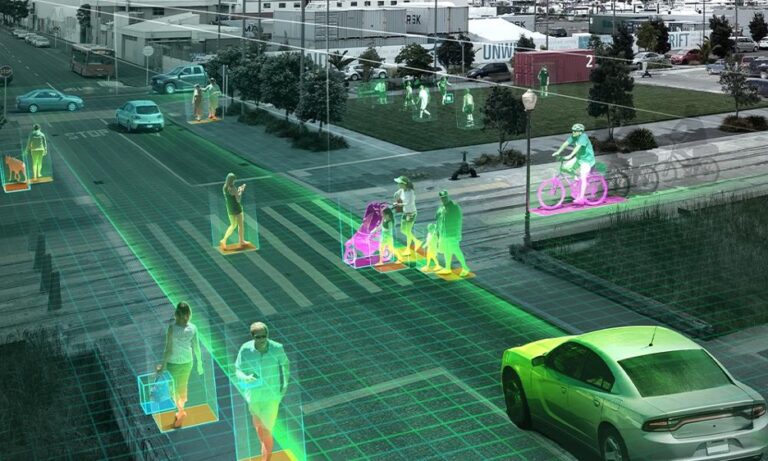 Join the NGC team for a webinar and live Q&A on Aug. 25, at 10 a.m. PT
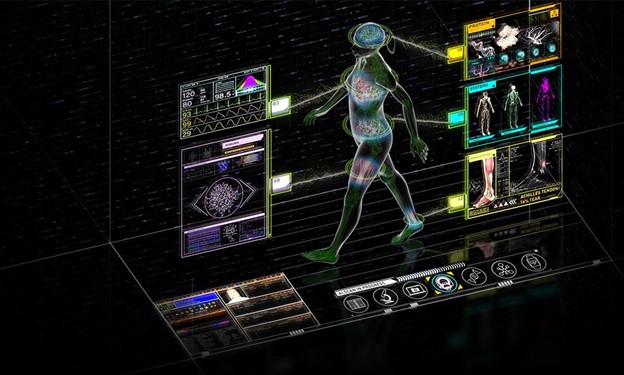 In this update, we look at the ways NVIDIA TensorRT and the Triton Inference Server can help your business deploy high-performance models with resilience at scale.
 Using AI researchers have developed a new method for turning X-ray data into 3D visualizations, hundreds of times faster than traditional methods.